

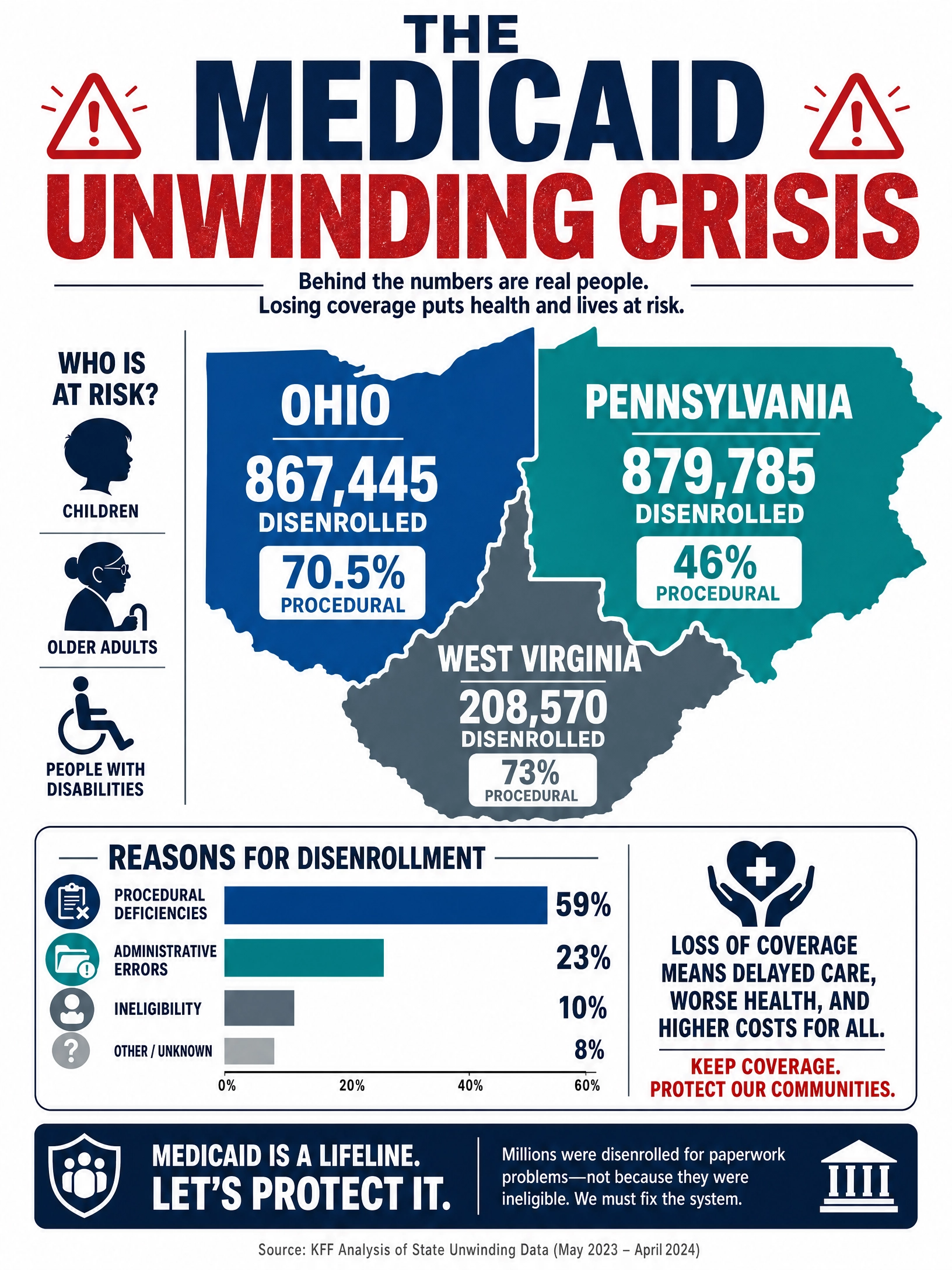
The termination of federal continuous medical coverage protections in 2023 initiated one of the largest healthcare disenrollment actions in recent history. For more than three years during the national public health emergency, federal law required states to maintain uninterrupted Medicaid enrollment without annual redetermination. This mandate, established under the Families First Coronavirus Response Act, functioned as a statutory safeguard to prevent the loss of essential medical benefits during a national crisis.
When the federal administration rescinded this protection, states were legally obligated to resume eligibility reviews, income verification, and procedural compliance checks. This process, widely referred to as Medicaid unwinding, resulted in substantial disenrollment across Ohio, Pennsylvania, and West Virginia. Many removals occurred not because individuals were substantively ineligible, but because of procedural deficiencies, administrative errors, or failures to satisfy documentation requirements.
Total Individuals Removed From Medicaid Coverage
Ohio, Pennsylvania, and West Virginia Combined
More than two million residents across the tri state region have been removed from Medicaid coverage since the federal protections were lifted.
This constitutes a significant legal and public health event affecting vulnerable populations, including children, disabled adults, low-income workers, and elderly individuals dependent on state administered medical assistance programs.
Ohio
Estimated disenrollment:
Approximately one million fifty thousand residents
Ohio maintains one of the largest Medicaid populations in the United States. Following the termination of federal continuous coverage protections:
- More than one million residents were removed from Medicaid
- Approximately seventy percent were removed for procedural or administrative reasons
- Many disenrollments resulted from failure to return renewal forms, incomplete documentation, or inability to verify eligibility within statutory deadlines
Legal and public health impact
- Disruption of continuity of care for chronic conditions
- Increased uncompensated care burdens on hospitals
- Interruptions in behavioral health and addiction treatment
- Significant impact on Appalachian and rural counties with limited access to legal and medical resources
Pennsylvania
Estimated disenrollment:
Approximately nine hundred fifty thousand residents
Pennsylvania’s Medicaid program is heavily utilized in Western Pennsylvania, where many residents rely on state funded medical assistance.
- Nearly one million residents were removed from coverage
- Approximately sixty percent were removed for procedural noncompliance rather than substantive ineligibility
- Western Pennsylvania counties experienced high disenrollment due to documentation delays and address verification issues
Legal and public health impact
- Increased uninsured rates among minors and working families
- Greater strain on emergency departments and safety net providers
- Disruption of treatment plans for individuals with chronic or behavioral health conditions
West Virginia
Estimated disenrollment:
Approximately one hundred fifty thousand residents
West Virginia has one of the highest Medicaid participation rates in the nation. When federal protection expired:
- Approximately one hundred fifty thousand residents were removed
- Many disenrollments involved disabled adults and children
- Rural counties experienced significant barriers to compliance due to limited internet access and administrative support
Legal and public health impact
- Interruptions in addiction treatment and recovery programs
- Increased uncompensated care for rural hospitals
- Removal of eligible individuals due to procedural deficiencies rather than statutory ineligibility
Why So Many Residents Lost Coverage
Across all three states, disenrollment occurred primarily due to:
Procedural deficiencies
- Failure to return renewal forms
- Incorrect or outdated contact information
- Missing verification documents
- Administrative processing errors
Administrative overload
State agencies were required to process years of delayed eligibility reviews within compressed statutory timelines.
Regulatory confusion
Many beneficiaries were unaware that federal protections had expired and that they were required to reestablish eligibility.
Termination of federal emergency authority
The end of the national public health emergency removed legal protections that had previously prevented disenrollment.
Populations Most Affected
The groups most significantly impacted include:
- Children enrolled in Medicaid and CHIP
- Low income working adults
- Individuals with disabilities
- Elderly residents in assisted living or long-term care
- Rural residents with limited access to legal or administrative assistance
- Individuals receiving addiction treatment or behavioral health services
Many of these individuals remain legally eligible for Medicaid but were removed due to procedural or administrative issues rather than substantive ineligibility.
Regional Summary
Ohio: approximately one million fifty thousand
Pennsylvania: approximately nine hundred fifty thousand
West Virginia: approximately one hundred fifty thousand
Total:
Approximately two million one hundred fifty thousand residents removed from medical coverage
This represents one of the most significant healthcare disenrollment actions in the region’s modern history, with substantial legal, medical, and economic consequences.